Wicked Without Coffee: A Designer's Real-World Review
When a new embroidery design lands in my library, my first question isn’t about its specs—it’s about its soul. What vibe does it carry? Where would it truly shine on a finished product? Let’s talk about Wicked Without Coffee, a design that immediately presents itself as more than just a seasonal graphic.
The First Impression: A Playful, Everyday Gothic Mood
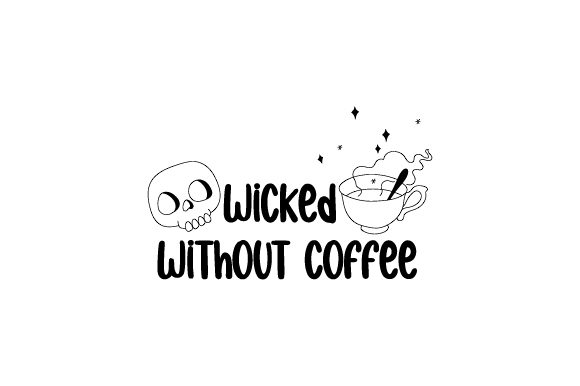
At first glance, Wicked Without Coffee strikes a clever balance. The skull motif brings that classic, slightly gothic edge, while the steaming coffee cup is utterly relatable and warm. This isn’t a full-on scary Halloween piece; it’s a witty, everyday warning with a personality that feels both playful and a little mischievous. The layout, with the quote integrated around the central icons, suggests a design meant to be appreciated as a whole, not just as separate elements. The detail level looks manageable for most machine embroidery setups—the skull has clear areas for fill stitch, and the cup offers nice opportunities for contrasting satin stitch highlights. Its visual personality is perfect for the crafters, apparel decorators, and small shop owners who want to offer something that feels personal and a bit cheeky, rather than purely decorative.
Where This Design Naturally Belongs
I’m picturing this on a cozy, washed-black sweatshirt—the kind of custom apparel someone would wear proudly on a crisp fall morning. But its application goes far beyond that. Imagine a embroidered patch on a canvas tote bag for a coffee-loving friend, or subtly stitched onto a chef’s apron for a bit of kitchen humor. As a personalized gift, it would work wonderfully on a tea towel or a pillow cover for a cozy living space. For small business merchandise, think about tote bag designs or baby embroidery (on a teen’s hoodie, of course) for a boutique that caters to a fun, modern clientele. The description mentions mugs and tumblers, which points directly to printable mockups for digital product sellers—this design has strong potential as a versatile digital embroidery file and design asset for a range of craft business applications.
A Real-Life Scenario: The Boutique Sweatshirt Project
Let’s walk through a typical use case. I’m preparing a limited-run embroidered sweatshirt for my small shop. I’ve chosen a high-quality, mid-weight cotton blend. My goal is a clean, professional finish that my customers will trust. Using Wicked Without Coffee, I’d first consider scale. On a sweatshirt, it needs to be prominent but not overwhelming—likely a 4x4 hoop area or larger to preserve the clarity of the lettering and the cup details. I’d run a test on scrap fabric of the same texture to check the stitch density. The skull’s fill area could be dense, so proper stabilizer is crucial to prevent puckering on this slightly stretchy fabric. For thread colors, I’d lean towards a high-contrast scheme: perhaps a bright white for the skull and lettering against a dark grey or brown for the coffee cup, making the steam pop. The final result should feel like a premium, handmade product, not just a slapped-on graphic.
Performance in Key Embroidery Situations
On sturdy, non-stretch surfaces like tote bags or aprons, this design should stitch out beautifully. The mix of fills and potential outlines offers satisfying texture. For caps or hats, the curved surface requires careful attention—the small lettering of “wicked” needs to be stitched with a precise setup to maintain legibility. On thinner fabrics, like some tea towels, the overall density must be assessed to avoid fabric distortion. For dark fabric backgrounds, the design’s impact changes entirely; it becomes more stark and graphic. This versatility is a strength, but it demands that the embroiderer think through each application.
As a holiday embroidery idea, it’s perfect for Halloween, but its coffee theme makes it relevant year-round for gifts. For commercial embroidery projects, like a series of promotional items for a local café, it could be a engaging, brand-aligned asset. Its recognition factor is high—it’s a memorable, conversation-starting piece that boosts buyer engagement in an Etsy listing or at a craft fair.
Caution Areas and Designer Notes
There are places where Wicked Without Coffee requires a careful approach. I would be hesitant to run it on very small hoop sizes—the detail in the skull’s eyes and the cup’s steam might lose definition. Highly textured fabrics could obscure the clean lines. The tiny lettering, especially if the design is minimized, is a point to inspect closely during a test run. On baby items or delicate fabrics, the stitch count and density should be verified first. For products destined for frequent washing, like apparel, a robust stitching plan with quality thread is non-negotiable to maintain longevity and customer trust.
My practical notes for any designer or maker using this file are straightforward:
- Always test on scrap fabric that matches your final project’s texture and weight.
- Check thread color contrast on both light and dark fabric backgrounds; sometimes a mockup in black and white can reveal clarity issues.
- Review the stitch density in your software preview—adjust if needed for your specific fabric.
- Confirm the hoop size needed to keep all elements sharp.
- Use the appropriate stabilizer for your fabric type; this is key for a professional finish.
- Most importantly, check the provided license terms. Ensure it’s cleared for both personal and commercial embroidery projects if you intend to sell the finished products or use it as part of your small shop product line.
The Final Stitch: Value, Appeal, and Professionalism
Ultimately, Wicked Without Coffee succeeds by blending theme and function. It elevates a simple craft project into a story-telling piece. Its visual appeal on a finished product comes from that witty combination—it feels designed, not just downloaded. For the creative entrepreneur, it adds value through its versatility and ready-made personality. It enhances handmade presentation by offering a clean, complete graphic that looks intentional. For brand consistency, a shop with a fun, slightly alternative vibe could use this across multiple products seamlessly. Its giftability is high—it’s personal and humorous. When stitched well on the right product, it communicates professionalism and care, which is what turns a one-time buyer into a repeat customer.
In the end, my judgment as a designer is that this is a solid, usable design for real-world projects. It has character, and it provides a great canvas for the embroiderer’s skill to shine through. Approach it with practical preparation, and Wicked Without Coffee will stitch up into something your clients and friends will genuinely enjoy.